



Opening one point of sale, then ten, then fifty… For a commercial network, an agency chain, or a young franchise, growth often hinges on multiple parallel projects: commercial leases, renovations, recruitment, local communication. On this list, signage frequently comes last. Yet it is the very first thing the customer sees.
The wall logo behind the reception desk, the cut-out letters in the showroom, the interior sign identifying a space, the storefront sign of a boutique: these elements are the physical materialization of the brand, repeated across the entire territory. And it is precisely this repetition that changes the nature of the topic. Manufacturing a beautiful wall logo for a single location is one thing. Deploying eighty identical ones, on deadline, over a year, is another.
What exactly are we talking about ?
We are talking here about the signage found in the vast majority of agency networks, offices, and retail locations : the wall logo at reception or in the customer space, raised cut-out letters decorating a showroom or meeting room, interior signage identifying an area (checkouts, order pickup, reception), and small or medium-format exterior signage mounted on the facade of a store or agency.
In this article, we intentionally set aside very large illuminated storefront signs, which belong to a different logic : custom manufacturing, electrical connection, cherry picker installation, maintenance. For the overwhelming majority of networks (insurance, real estate, services, dealerships, catering, local retail), the core of the rollout happens elsewhere : on the walls, indoors, inside each location.
Brand consistency, the network's primary visual asset
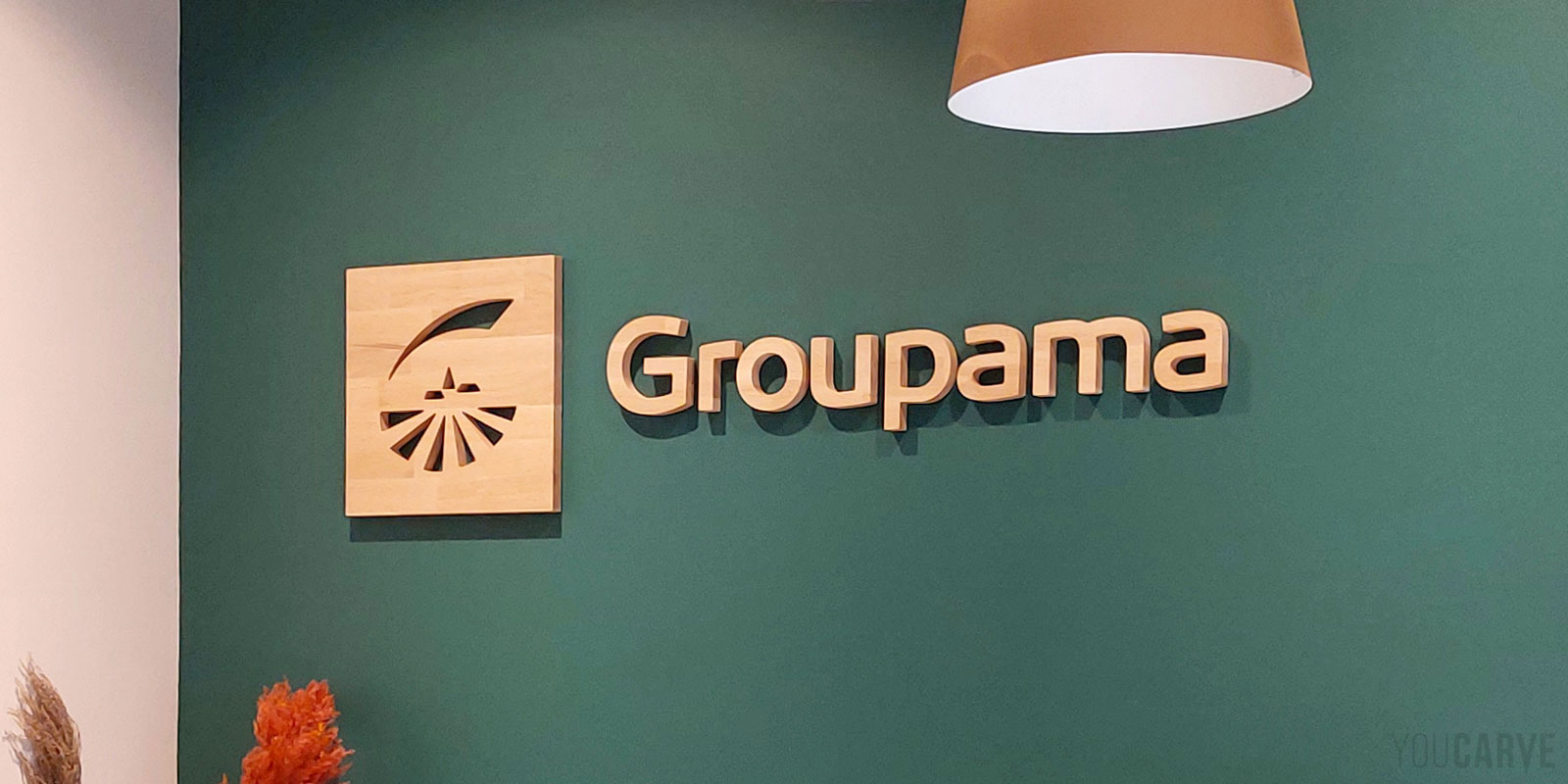
More than a hundred wooden wall logos manufactured for Groupama agencies across an entire region: at this scale, manufacturing consistency becomes the central focus.
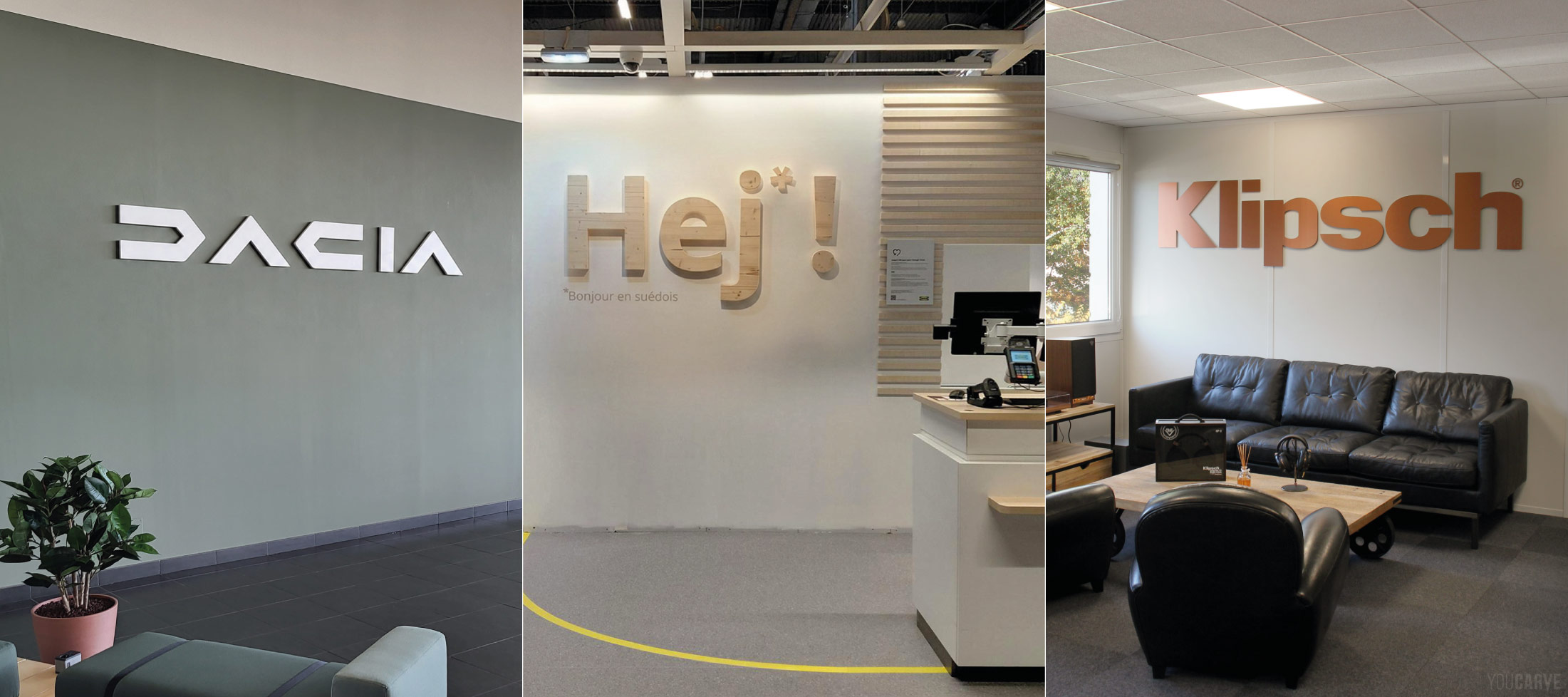
A network does not merely sell a product or a service : it sells an identical promise from one site to another. A customer stepping through the door of an agency in Rennes should experience the exact same thing seen in Lyon. This consistency relies on very concrete details : the exact material and shade of the logo, the relief and thickness of the letters, the placement on the wall...

The Oxia wall logo installed in the reception area of the Lyon agency.

The same logo in the offices of the Paris Montparnasse agency.
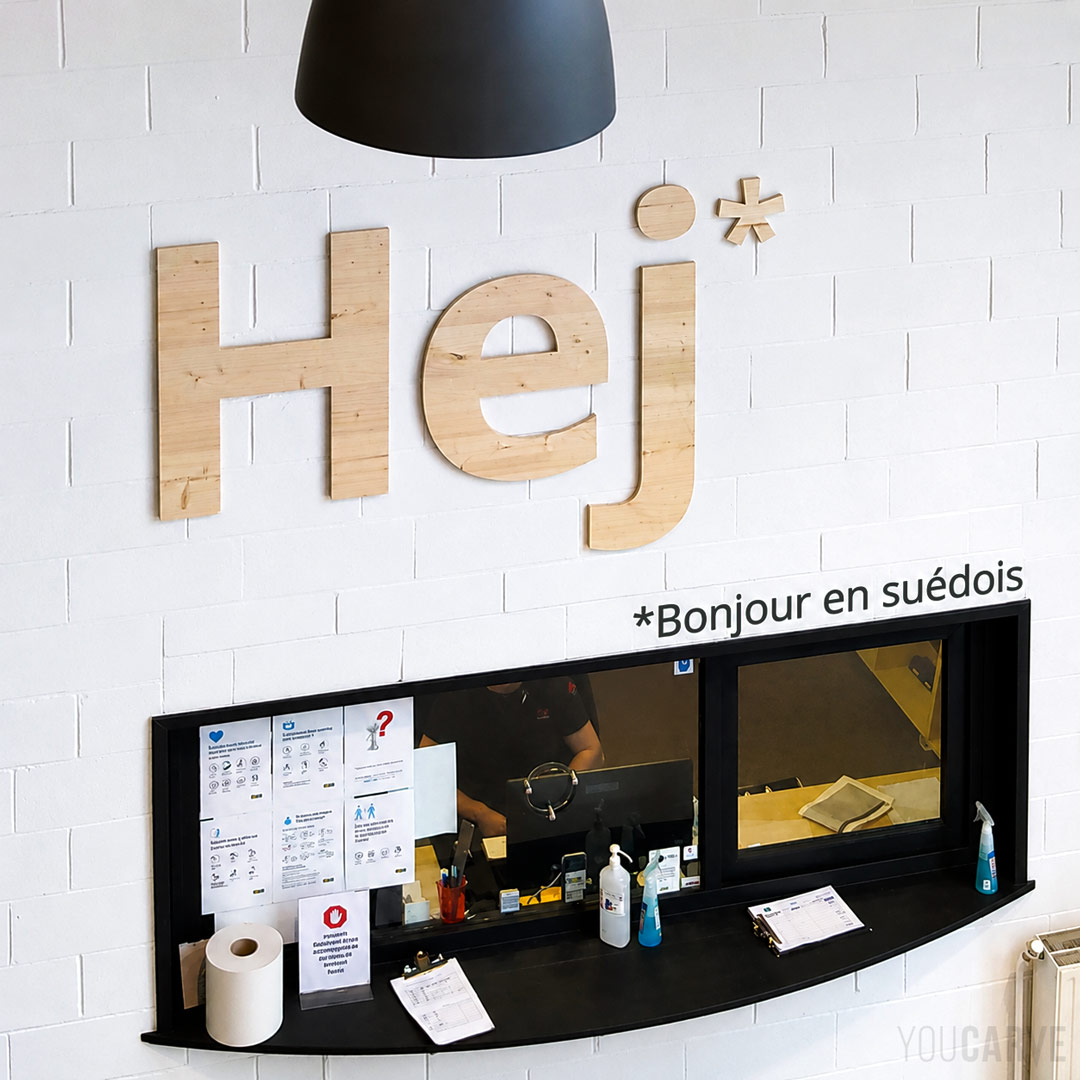
The 'Hej' logo installed at the customer service area of the Ikea store in Lomme.
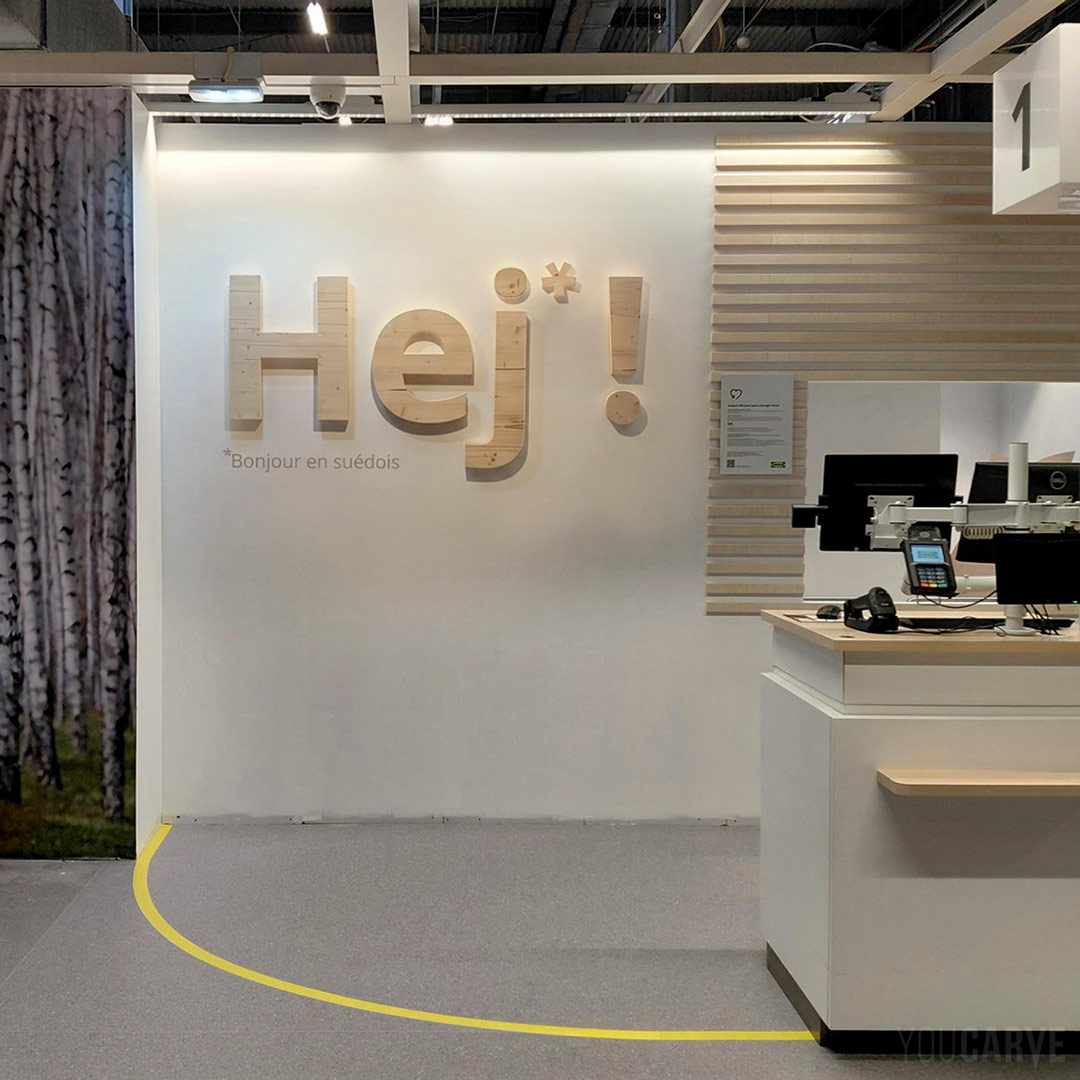
The 'Hej' logo featured at the checkout exit of the Ikea store in Lille: identical material and proportions.
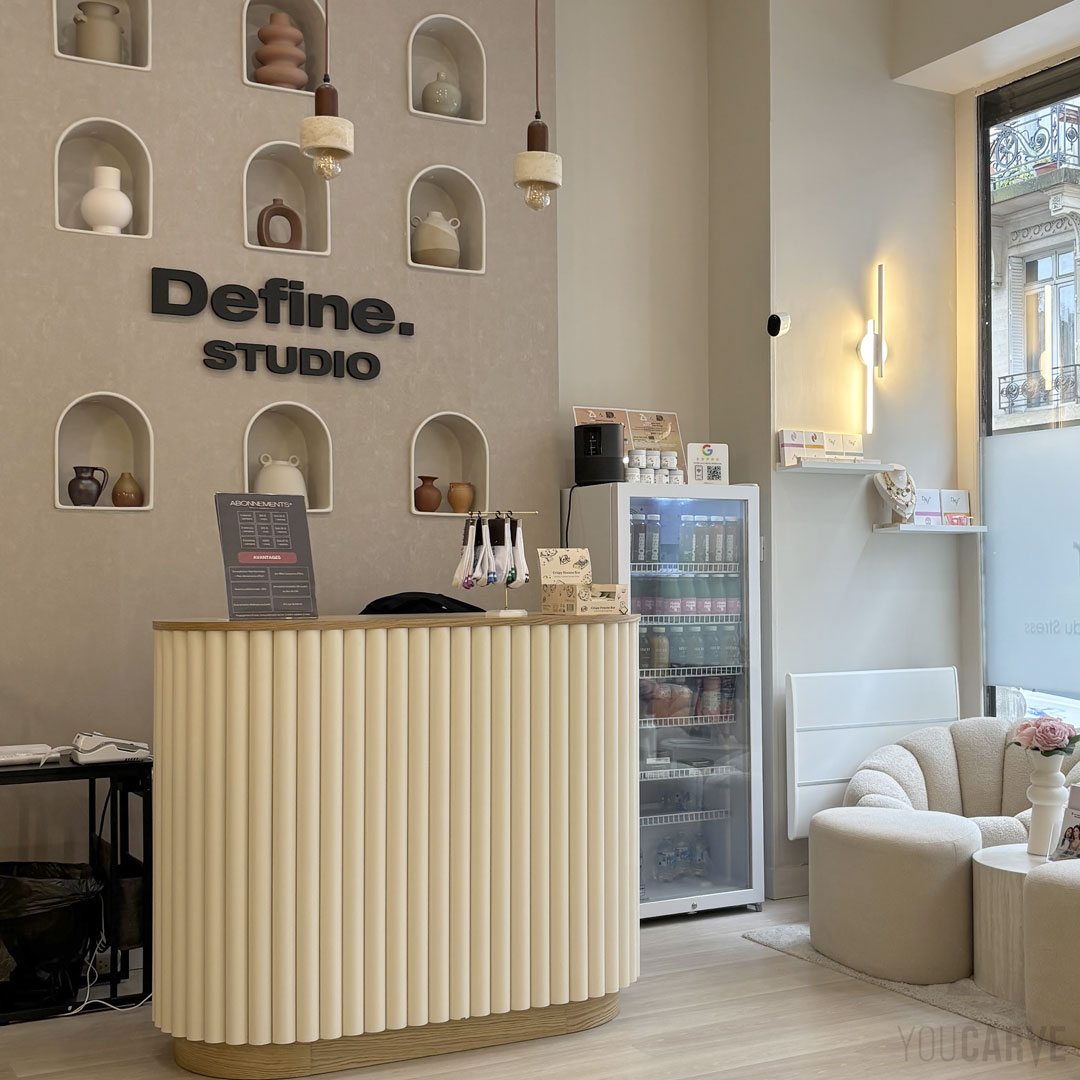
Black expanded PVC wall logo at the reception of Define Studio in Paris.
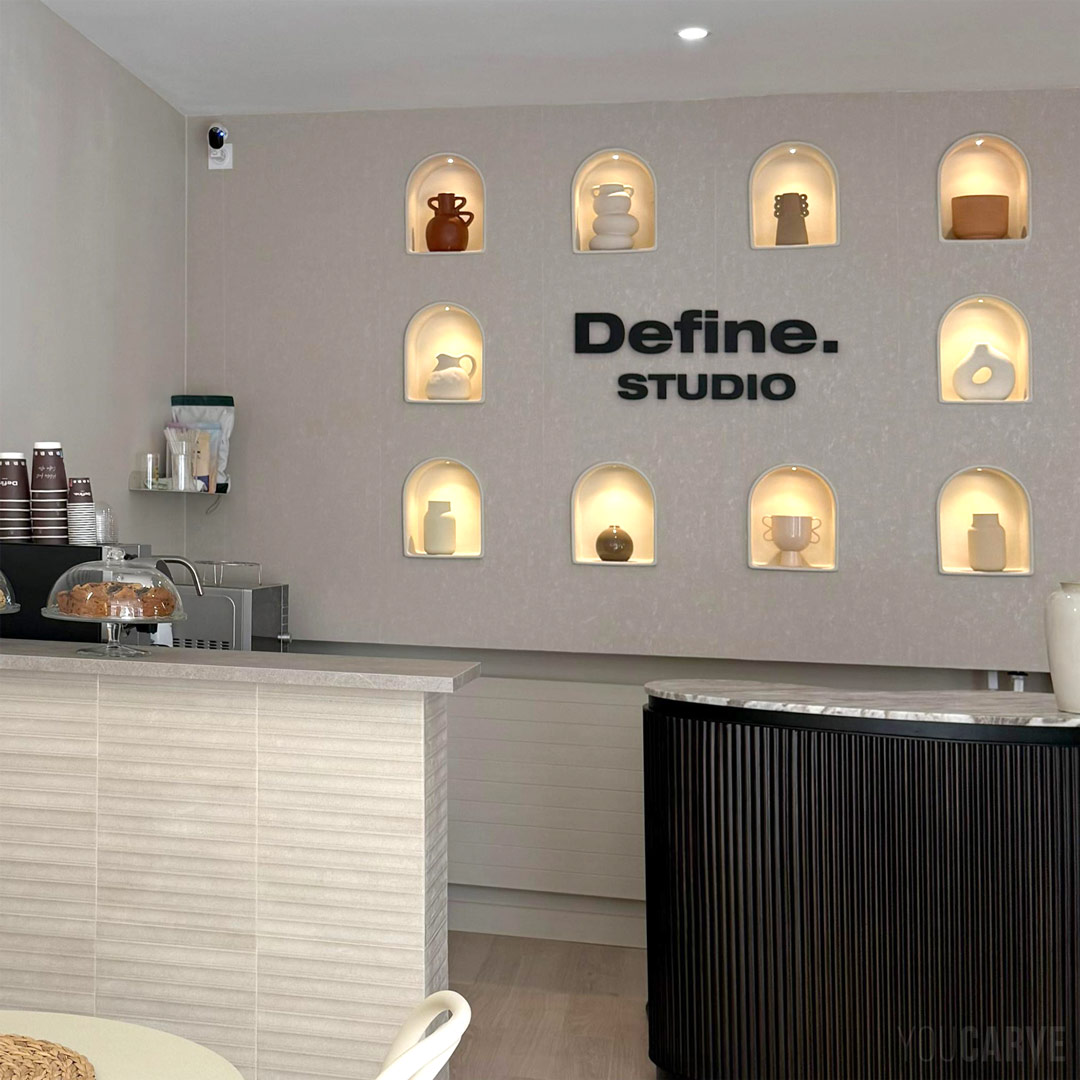
The same logo at the reception of Define Studio in Nice: identical manufacturing and installation.
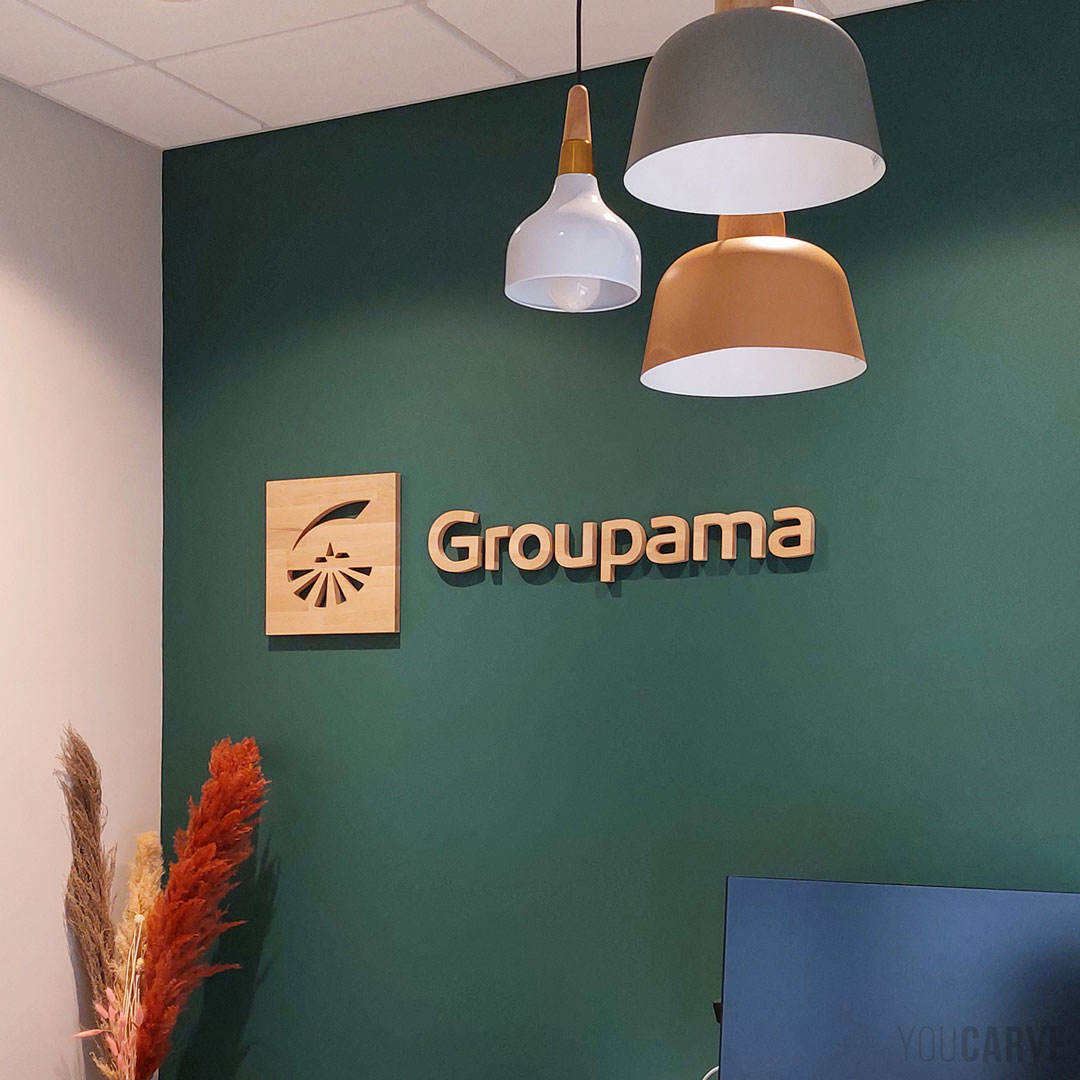
Oak wall logo in a Groupama agency, installed behind an advisor's desk.
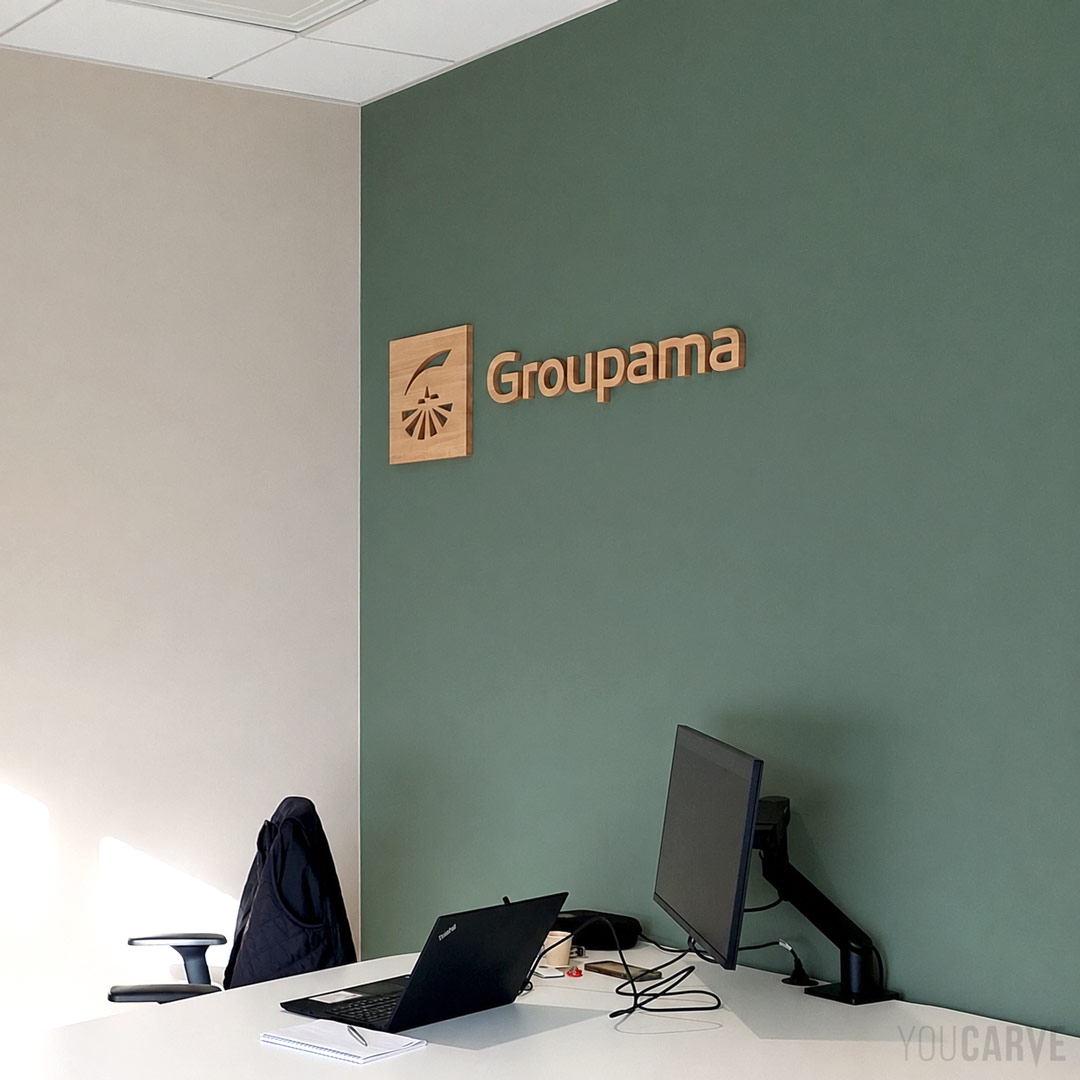
The same logo, in another agency within the network: identical material, dimensions, and relief.
Yet this is precisely where networks slip up, almost always for the same reason: scattered purchasing. When each franchisee or site manager orders their signage from a different provider, everyone does their best with the means, files, and references available to them. The logo is "roughly" the right color, the font "looks similar," the material varies according to the habits of each local supplier.
The primary challenge of a nationwide rollout is therefore right here: centralize manufacturing with a single provider, capable of producing every copy using the exact same files, materials, and settings. For example, we produced about a hundred wooden wall logos for Groupama agencies across an entire region. At this scale, the question is no longer "is this logo well-made?" but "is the hundredth one identical to the first?".
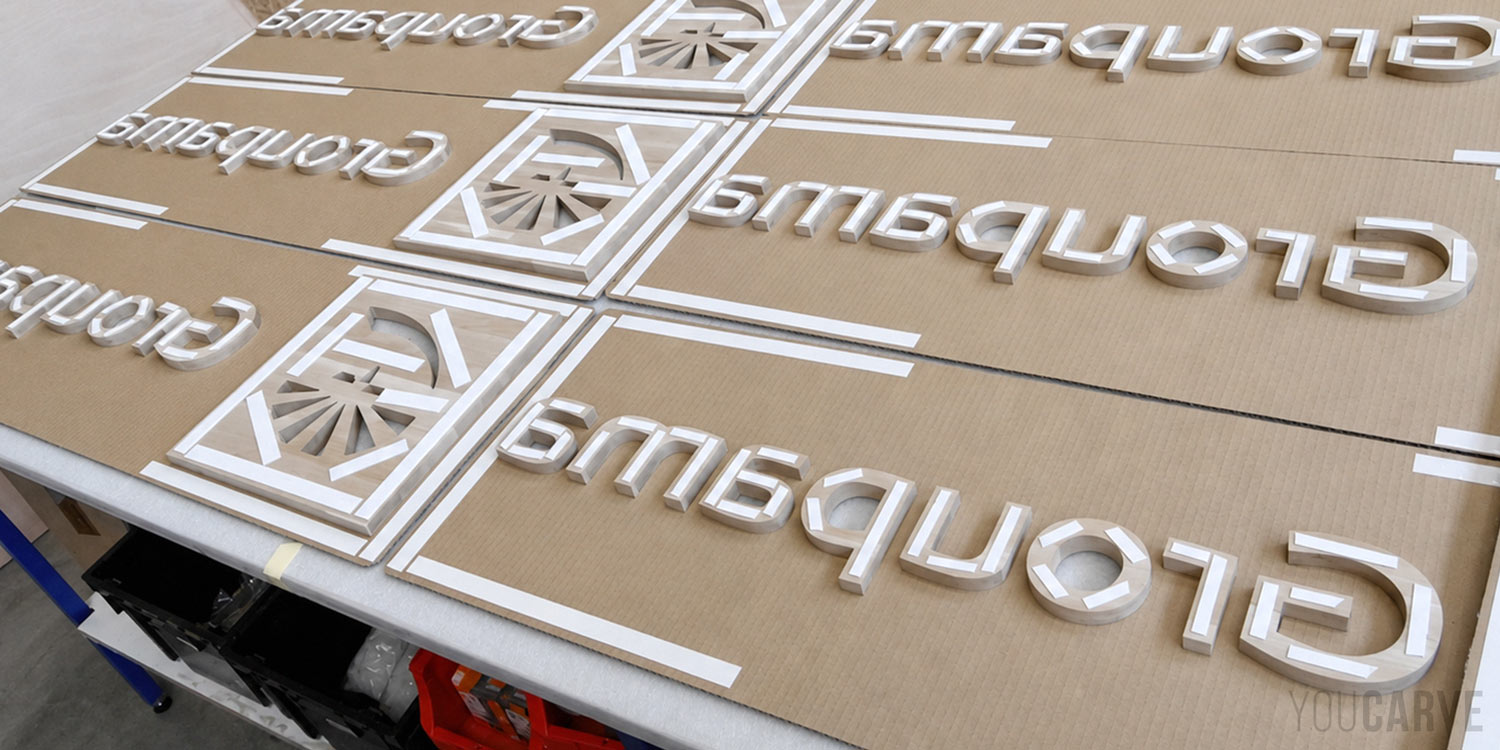
Series of oak wall logos for Groupama agencies, being prepared in the workshop. The parts are inspected and placed face down in their mounting templates: double-sided adhesive is applied to the reverse, piece by piece, prior to packaging.
Consistent quality, non-negotiable
Consistency is not only tested at the moment of installation. It is also tested over time. A logo that yellows, letters that peel off, relief that warps: every visible defect on a site degrades the image of the entire network. The customer does not think "this franchisee chose a poor supplier." They think the brand is neglected. And that kind of damage cannot be undone with an advertising campaign.
Choose the right material and stick to it
KömaCel® expanded PVC, 3-ply natural spruce wood, Dibond® aluminum composite : each identity or application gets its material, but it remains the same across the entire portfolio.
Not all materials are suitable for every use. The first consideration is aesthetic. Shade, texture, thickness, finish: the material communicates something about the brand. Wood does not convey the same feeling as lacquered PVC or composite aluminum: warmth for one, a sharper contemporary feel for the others. This choice is part of the visual identity just like the logo colors, and deserves to be specified in the brand guidelines. Next come technical considerations. A material perfect for indoor use may not be suitable for storefront facades. A network needs a single point of contact capable of prescribing the right material for each configuration, and then sticking to it across the entire network. This is what leads an automotive dealership network to select a 30 mm thick white expanded PVC from KömaCel® for about a hundred interior showroom signs, a furniture manufacturer group to choose wood for its checkout and order pickup area signage, or a small pizza chain to opt for black Dibond® composite aluminum for its storefront lettering. To each use its material. But within the network, the exact same material everywhere.
Manufacture the exact same thing, every time
A workshop that masters its production in-house, with a stable process, will deliver the same quality in January as in September, whether on an order for 2 pieces or 40. This really matters at a network scale.
Reliable lead times, a key knockout criterion
In a rollout, delivery time is not a matter of convenience : it is an absolute dealbreaker.
A store opening is a precision-engineered process. The date is set, communicated, sometimes publicized. Everything can be ready on day one, but if the logo is missing from the reception wall, the opening itself appears sloppy.
The issue is even more sensitive during a rebranding or an interior redesign. A new visual identity only makes an impact if deployed quickly. If replacing logos drags on over eighteen months, the old and new images coexist across the market, making the message sent to customers look muddled.
This requires a supplier capable of two things: offering reliable lead times (see our article on the topic), and absorbing volume spikes without faltering. Many providers hit deadlines on single orders. Far fewer maintain them when fifteen store openings occur in the same quarter.
Installation, the most underrated factor
This is often the blind spot of a rollout: who installs, and how ? Hiring a professional installer for every location is a solution, but it comes at a cost, adds another contractor to coordinate, and complicates every opening. For interior wall logos and small to medium-sized signs, it is rarely necessary: if the franchisee or local team can install their signage themselves, the rollout gains in speed and cost efficiency.
However, the technical solution must truly allow it. Self-installation is only viable if the manufacturer planned for it upstream: hardware suited to the surface (high-performance double-sided adhesive for indoor wall logos, snap-in standoffs for a raised 3D effect), and above all, a positioning template to guarantee a clean installation without specialized skills.
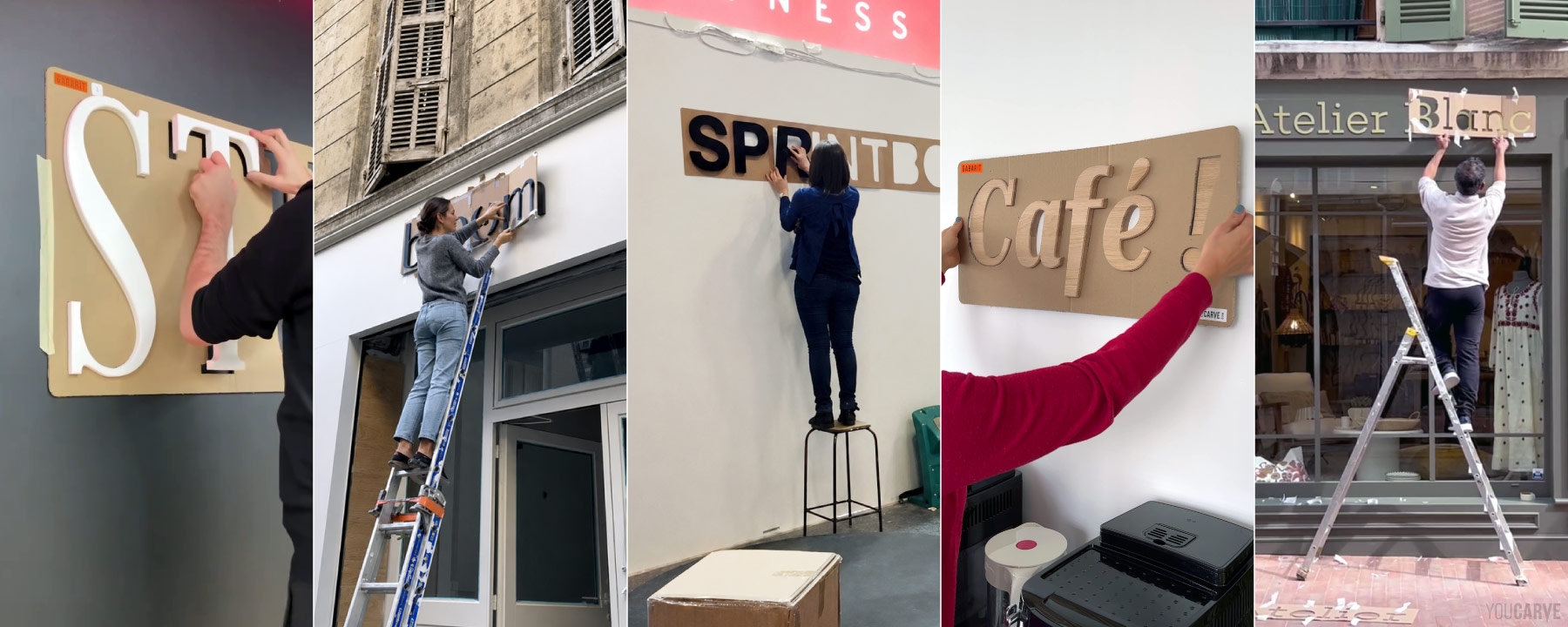
Placement templates ensure millimeter-precise positioning and alignment without specialized skills : the key prerequisite for independent installation by local teams.
This aspect is worth testing before committing to a rollout contract : ask to see the installation solution, and have someone inexperienced try it out. If your least handy franchisee can install their wall logo cleanly in under an hour, you have just simplified every future store opening.
Design early, test on a pilot site
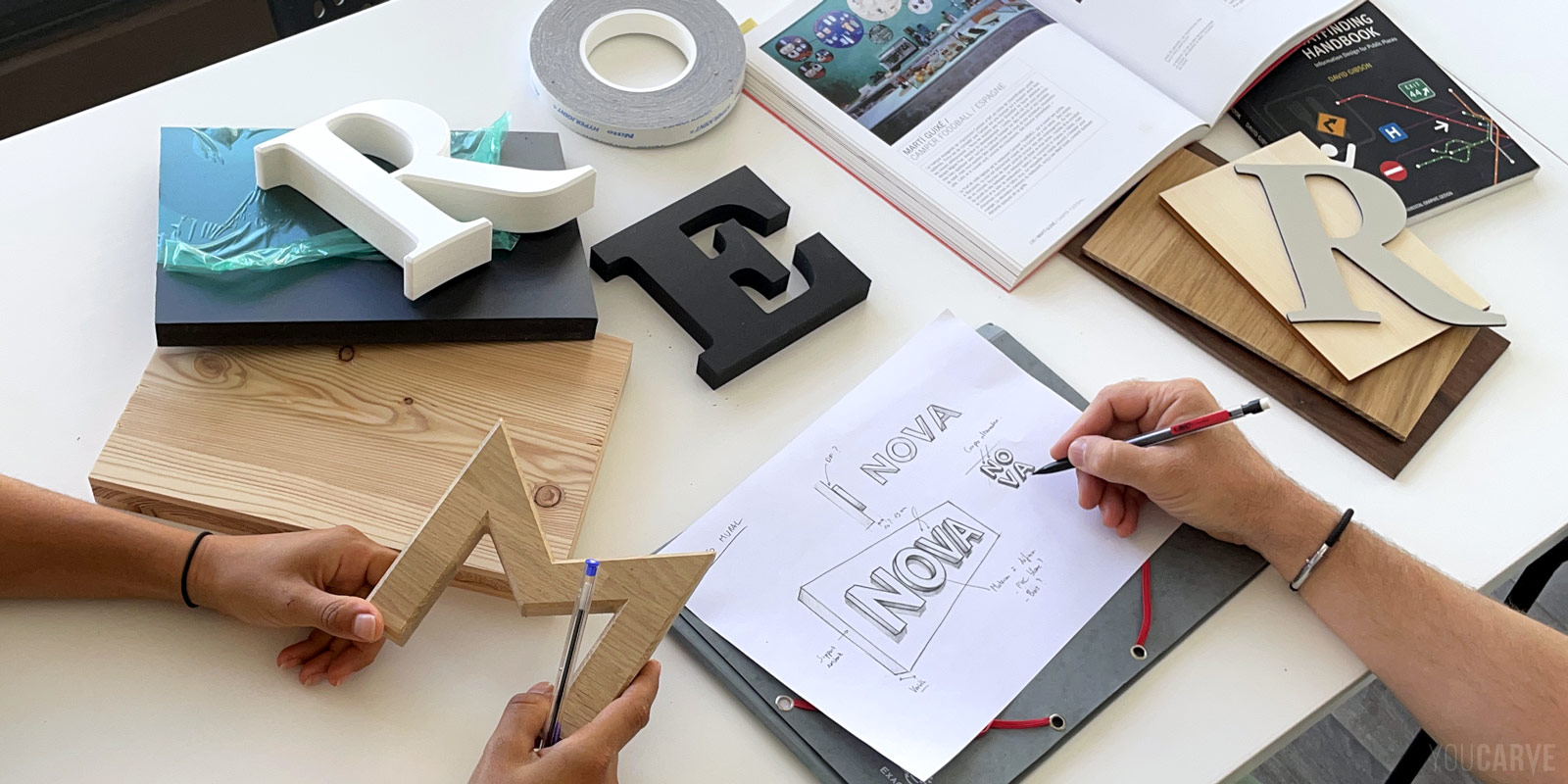
Before any deployment, the solution is validated on samples and then on a pilot site : material rendering, ease of installation, surface compatibility...
In the most successful deployments, particularly within major chain establishments, signage is planned well in advance—often by a designer or interior architect tasked with defining the store environment's identity.
In this scenario, the specifier plays a central role. They handle the foundational work: identifying manufacturers, testing creative vision against workshop realities (available materials, fabrication constraints, installation options), and refining the concept before validating it on a prototype, test wall, or pilot location.
Only once this validation is complete do they recommend the solution to their client, along with precise specifications: material, thickness, finish, mounting method. The network then consults the manufacturer on this foundation. Several of the projects mentioned above originated this way: dialogue didn't begin with a purchase order, but with a sample, technical questions, and a test wall.
This process offers a valuable lesson for all networks, with or without an architect: never roll out a solution nationwide that hasn't been tested on a pilot site. A prototype installed in real-world conditions reveals in weeks what no technical sheet ever could: how the material renders under local lighting, actual ease of installation, and surface behavior. On a single site, an adjustment is a minor detail. Across eighty sites, it becomes a costly correction plan.
Volume, a cost leverage opportunity to maximize
A network enjoys a clear advantage over a single retailer: volume.
Consolidating orders with a single supplier enables them to optimize material purchases, amortize setup costs, and streamline production. This optimization should translate into cost savings: negotiated network-wide rates that are significantly more advantageous than ordering one-off fabrications site by site.
This is an opportunity many networks miss out on, precisely because purchasing remains fragmented. Eighty isolated orders placed with eighty different suppliers mean paying single-unit prices eighty times, alongside handling scattered contacts and invoices network-wide.
Centralization also delivers a non-trivial administrative advantage: a single vendor account, a locked template library aligned with brand guidelines (ensuring franchisees order the correct item in the proper material without deviation), and consolidated billing. For network managers, it is the difference between leading efficiently and constantly playing catch-up.
Anticipate logistics and network lifecycle
One final challenge that is rarely anticipated : a rollout does not stop when the first logos are delivered.
Depending on the network structure, signage may go through a central warehouse before being dispatched to individual sites as openings occur. In this scenario, individual logo packaging becomes critical: clean storage, easy picking, and reshipment without repackaging.
Similarly, installation instructions can be customized with the network's branding and procedures, rather than remaining generic. It is a small detail, but it prevents unnecessary calls to headquarters during store openings.
Finally, a signage network evolves: locations move, walls are repainted, letters get damaged. The supplier's ability to handle reorders—meaning re-manufacturing an identical element ordered two years earlier—must be an integral part of the specifications. An archived vector file, consistently available materials, and documented machine settings: without these, every minor incident becomes a brand-new project.
In summary : seek a true partner, not just a vendor
Deploying wall logos or signage on a national scale is not about buying a repeated commodity. It begins with developing a solution proven on a pilot site before full rollout, followed by establishing centralized manufacturing to guarantee visual consistency, long-term durable quality, user-friendly installation for site autonomy, dependable delivery for every opening, volume-driven savings converted into negotiated rates, and logistics designed to support the entire network lifecycle.
Addressing these challenges early—while the network structure is still agile—yields the greatest impact : preventing ad-hoc exceptions, rework, and costly compromises with every new location opening.